

By Logan Carter
Newport News sits on the edge of change. Our weather patterns, waterways, and shoreline are subtly shifting—and our community is feeling it. From climate-driven trends to seasonal surprises, here’s what locals need to know about weather and the environment in our area.
Climate Trends Along the Tidewater Region
Virginia’s Tidewater—our coastal region including Newport News—has a humid subtropical climate, which means warm, sticky summers, mild winters, and lots of influence from the Chesapeake Bay and the Atlantic Ocean. The water bodies make summers humid and winters more moderate than in Virginia’s inland mountains. Mean January temperatures hover around the 30s to 40s°F, while July highs often reach well into the 80s°F. Precipitation is abundant through most of the year.
Increasing Temperatures and Weather Extremes
Our city isn’t immune to broader climatic shifts. Virginia has warmed by more than 1.5°F since the early 20th century. Winters are bringing fewer extreme cold nights, and summertime heat—especially when humidity is high—is growing more intense.
Chesapeake Bay Warming and Environmental Impacts
Bay waters are rising in temperature, especially during summer months. Studies from the Virginia Institute of Marine Science show that warming summer temperatures are occurring at three to four times the rate of winter warming since the mid-1980s. This affects aquatic life—from oysters to submerged grasses—as well as water quality.
Shifting Precipitation and Sea Level Changes
Seasonal precipitation patterns are in flux. Compared to earlier historical averages, autumn rainfall in the Tidewater region has increased, while summer rainfall is trending down—putting stress on waterways, infrastructure, and local agriculture.
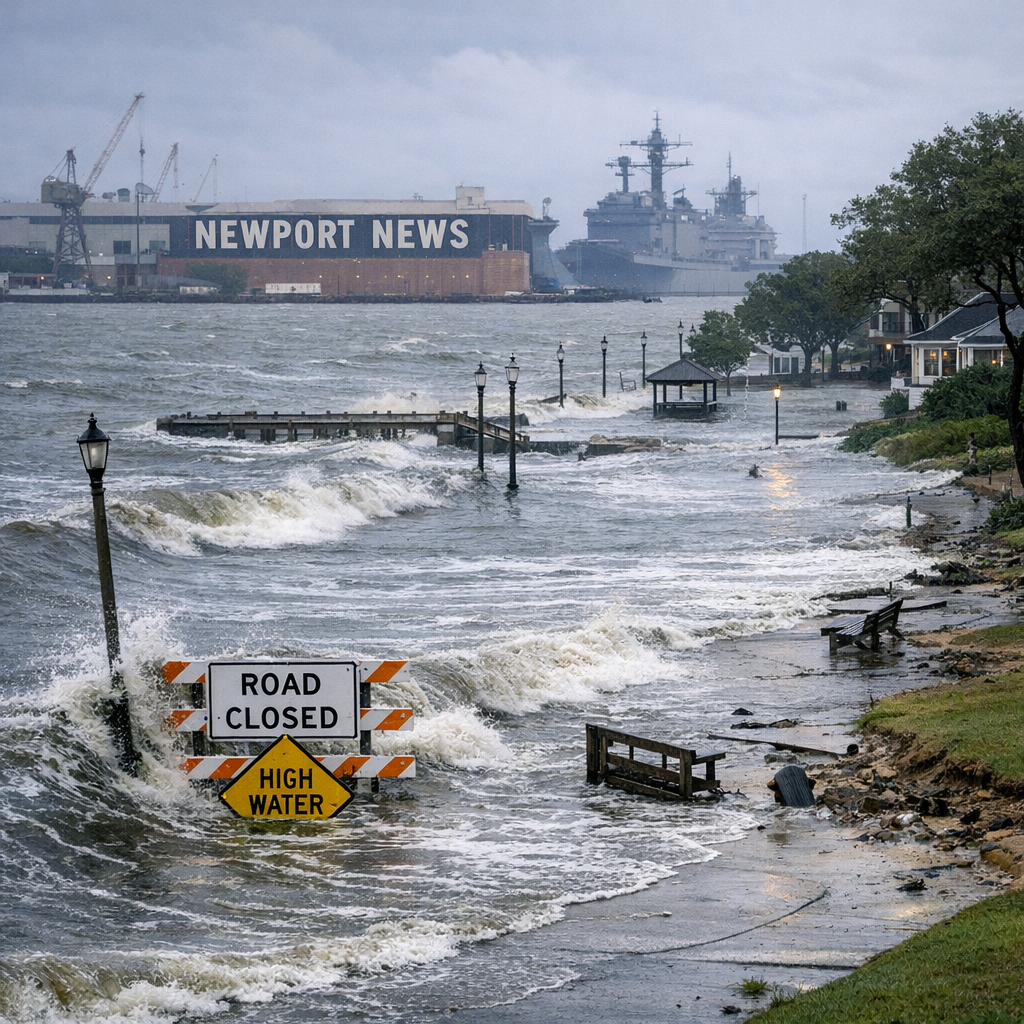
Meanwhile, relative sea-level rise adds another layer of risk for Newport News. Land subsidence, regular high tides, and storm surge make certain low-lying areas more vulnerable, especially during coastal storms. Small increases in sea level translate into regular minor flooding in areas that were once safe.
What This Means for Our Community
- Storms may bring harsher impacts: stronger thunderstorms in summer, more moisture in the atmosphere, rising tide levels that worsen flooding during rainfall.
- Infrastructure stress: roads, drainage systems, and sea defenses must adapt—water loading, erosion, and saltwater intrusion require planning.
- Ecological shifts: fish, plants, and wildlife respond to changes in water temperature, salinity, and timing of seasonal cues. Bay species and marsh ecosystems are on the front line.
- Public health implications: heat stress, air and water quality, and the risk of vector-borne illness may increase as summers grow hotter and wetter.
What We Can Do as Locals
Facing slow changes doesn’t mean sitting still. Here are some local-scale actions Newport News residents and organizations are already, or could be, taking:
- Strengthen shoreline and flood mitigation planning—to map vulnerable zones and invest in resilient design.
- Promote green infrastructure: rain gardens, permeable pavement, and tree canopy can help manage stormwater.
- Support Bay restoration and clean-water initiatives to protect oyster reefs, marshes, and submerged aquatic vegetation.
- Encourage energy efficiency, local cooling strategies, and community awareness of heat risks.
- Stay informed on climate science and local government adaptation plans—our City, the Commonwealth, and institutions like VIMS are producing assessments and projections.
Our weather and environment story isn’t just about what’s happening now—it’s about what we prepare for down the road. Newport News has always been shaped by its waterways. If we remain proactive—from informed residents to resilient planning—our connection to that water can become a strength rather than a vulnerability.