

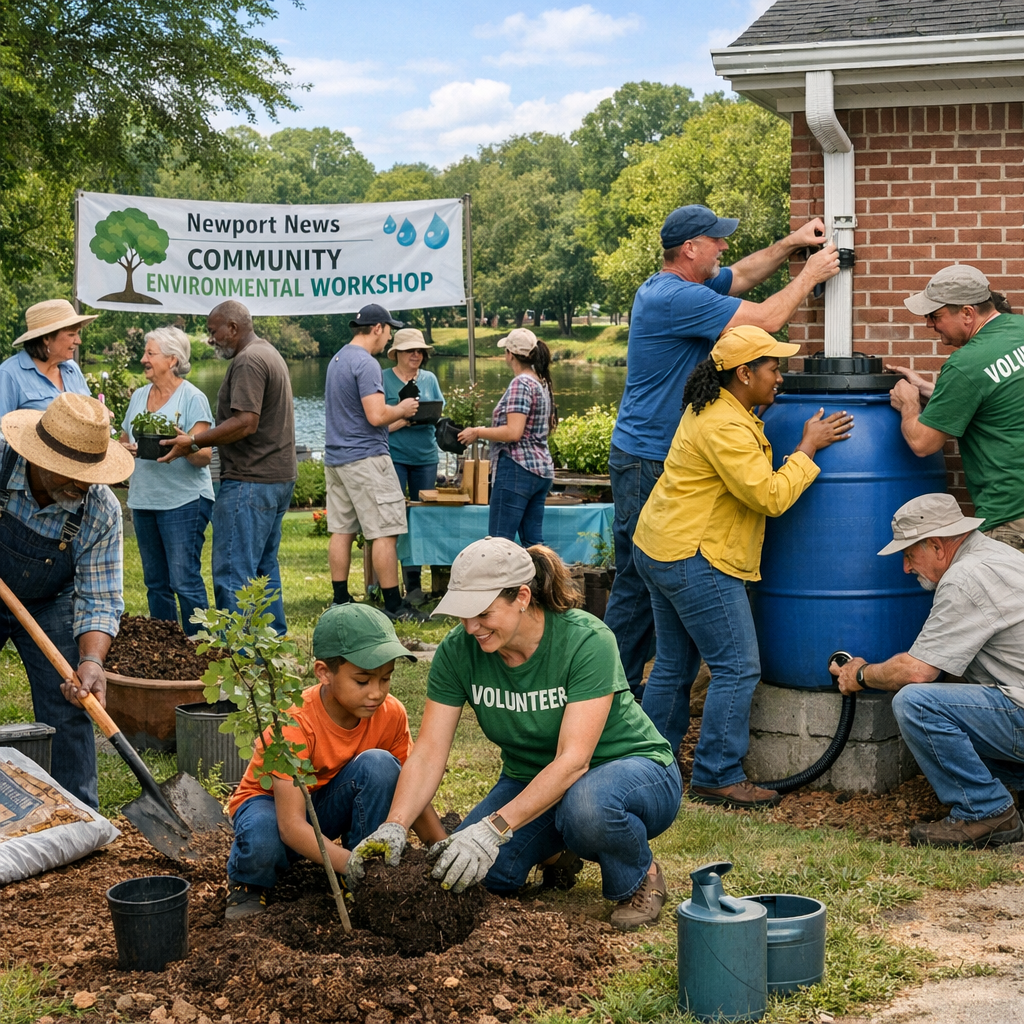
Newport News is actively implementing initiatives to bolster environmental resilience, focusing on water conservation, flood mitigation, and community engagement.
Water Conservation Efforts
The city’s Waterworks Department emphasizes the importance of water conservation due to the vulnerability of drinking water supplies to droughts. Residents are encouraged to adopt practices such as fixing leaks, using water-efficient appliances, and mindful landscaping to reduce water usage. Additionally, the Waterworks’ Forest Management program promotes the health of approximately 12,000 acres of watershed property, aiming to protect water quality through activities like timber harvesting, reforestation, and wildlife management. Learn more about water conservation efforts.
Flood Resilience Initiatives
To address increasing flood risks, Newport News is developing a Resilience Master Plan that assesses vulnerability to coastal and nuisance flooding, as well as projected sea-level rise. Strategies are being recommended to mitigate potential issues before flooding events and to facilitate quick recovery afterward. The plan focuses on minimizing the economic, social, and environmental impacts of changing conditions and flooding in the city. Read about the Flood Resilience Plan.
Community Engagement and Education
Community involvement is crucial for environmental resilience. The city offers programs like the Bay Star Homes initiative, encouraging residents to adopt green practices at home. Participants receive resources and recognition for their efforts in protecting local waterways and the environment. Additionally, the Mariners’ Museum and Park, through the NOAA Bay Watershed Education and Training (B-WET) grant, provides meaningful watershed educational experiences for ninth-grade students, involving them in restoration projects to improve the health of Mariners’ Lake. Discover the NNGreen program and learn about the B-WET initiative.
By integrating these efforts, Newport News aims to create a sustainable and resilient environment for its residents, ensuring the city’s natural resources are preserved and protected for future generations.